

Danielle Antosz
Updated Apr 11, 2025
As political tensions rise between the U.S. and Canada, partly fuelled by President Donald Trump's tariff policies, some people are caught in the middle.
Denise Amato, who currently lives in Tonawanda, New York, is a dual citizen of both countries. She says the current political climate has been challenging to navigate with her family and friends.
"I've noticed there's some strain," Amato told WKBW TV. "I'm a little concerned with that because we've been allies for so long."
Born in Niagara Falls, New York, and raised in Welland, Ontario, she has deep roots on both sides of the border. She says recent conversations with family and friends increasingly revolve around politics.
Tensions beyond trade policy
Early in March, Trump imposed 25% tariffs on most imports from Canada, with an exemption for products that are compliant with the United States-Mexico-Canada Agreement (USMCA). On March 12, he placed 25% tariffs on global steel and aluminum imports, including from Canada. On April 3, the president imposed 25% tariffs on imported vehicles with some exemptions. Trump has also threatened further tariffs on Canadian dairy and lumber products.
Canada, for its part, has responded by issuing retaliatory tariffs of its own on U.S. goods.
But these aren't the only actions that have caused friction between both nations. Trump has repeatedly suggested making Canada the 51st state of the U.S. — even mockingly referring to former Prime Minister Justin Trudeau as "governor" — comments Canadians perceived to be a threat to the country's sovereignty.
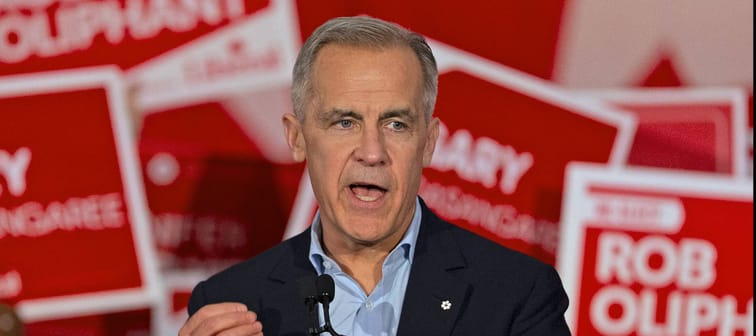
Regardless of whether or not Trump's quips were simply playful jabs, current Canadian Prime Minister Mark Carney has signaled that the old relationship between Canada and the U.S. is over.
"It's clear the U.S. is no longer a reliable partner," he said at a press conference on March 27. "It is possible that with comprehensive negotiations, we could re-establish an element of confidence, but there will be no going backwards."
Despite the turmoil and economic uncertainty between both countries, Amato insists she’s optimistic that the long-standing relationship between the U.S. and Canada will endure.
“We are friends, and we will be friends forever,” she said. “So, let’s please not allow the political climate to affect that.”

Sponsored
Smart investing starts here
Build your own investment portfolio with CIBC Investor’s Edge online and mobile trading platform. Enjoy low commissions on trades and special pricing for active traders, students and young investors.
Get started todayHow international relations can affect your wallet
International tensions aren't just another headline for American consumers — they can have real-world impacts on personal finances.
In the case of Canada and the U.S., individuals living near the border — particularly those with income or assets in both countries — can feel financial strain beyond the effects economic tools like tariffs have on sticker price. Fluctuations in currency exchange rates between the U.S. dollar and Canadian dollar can significantly impact purchasing power, investment returns and the cost of living.
For example, when tariffs escalate tensions, investor confidence may fall, causing currency volatility. If the Candian dollar weakens, Canadians who earn income in Canadian dollars but have expenses or investments in the U.S. face reduced spending power. Conversely, a stronger Canadian dollar could mean Americans pay more for Canadian goods and services.
Here are some ways to manage your personal finances in this time of uncertainty:
- Look for ways to spend less so tariffs don't impact your budget as much. For example, now is not the time to invest in a new vehicle unless you must.
- If you have funds in both countries, pay attention to exchange rates and identify favorable times to transfer funds between countries.
- Limit large cross-border purchases when exchange rates aren't in your favour — this includes everything from appliances to real estate.
- Diversify your assets by holding investments or accounts in both currencies and spending from whichever account is more favorable.
- While politicians debate policy, consumers on both sides of the U.S.-Canada border are left navigating the ripple effects — making it more important than ever to stay informed and financially flexible.
Sources
1. WKBW TV: Dual citizen living in Western New York shares perspective on tension between U.S. and Canada, by Jeff Russo (Mar 24, 2025)
How Dave Ramsey’s plan helps people ditch debt for good
Tired of living paycheck to paycheck? Dave Ramsey’s popular 7-step method shows you exactly how to wipe out debt and finally build real savings. No gimmicks — just a clear plan that works.

Danielle Antosz
Freelance writer
Danielle Antosz is a business and personal finance writer based in Ohio and a freelance contributor to Moneywise. Her work has appeared in numerous industry publications including Business Insider, Motley Fool, and Salesforce. She writes about financial topics that matter to everyday people, including retirement, debt reduction and investing.
Explore the latest articles

Many Canadians skip insurance for domestic travel
CAA survey revealed most think they’ll be able to use their provincial coverage

Nicholas Sokic
Contributor


Disclaimer
The content provided on Money.ca is information to help users become financially literate. It is neither tax nor legal advice, is not intended to be relied upon as a forecast, research or investment advice, and is not a recommendation, offer or solicitation to buy or sell any securities or to adopt any investment strategy. Tax, investment and all other decisions should be made, as appropriate, only with guidance from a qualified professional. We make no representation or warranty of any kind, either express or implied, with respect to the data provided, the timeliness thereof, the results to be obtained by the use thereof or any other matter. Advertisers are not responsible for the content of this site, including any editorials or reviews that may appear on this site. For complete and current information on any advertiser product, please visit their website.
†Terms and Conditions apply.
