
While we adhere to strict editorial guidelines, partners on this page may provide us earnings.

Jing Pan
Updated Jun 15, 2022
Not everyone is a fan of massive government spending.
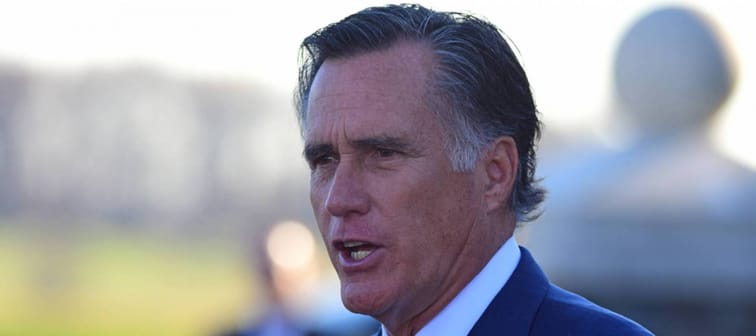
Sen. Mitt Romney (R-Utah), for instance, told Fox News last week that the Democrats “are pretty desperate” to pass President Joe Biden’s spending bill, which was recently trimmed from $3.5 trillion to under $2 trillion.
Romney’s main concern is spiking inflation.
But when it comes to government spending, the question on many investors’ minds is a simple one: “How do I make money from it?”
And in that context, Romney had some interesting things to say that might be worth paying attention to.
After all, Romney made much of his fortune through private equity firm Bain Capital, whose funds own shares in companies like Amazon and Alphabet.
But he didn’t mention tech stocks.
Instead, Romney talked about how Biden’s proposed tax on billionaires — to help pay for trillions of dollars of spending — would boost the demand for two specific asset classes: farms and fine art.
Let’s take a quick look at these often overlooked investment options.
Farmland

It’s no secret that the ultra-wealthy love farms.
Bill Gates — the fourth richest person in the world with a net worth of $136 billion — is the largest private farmland owner in the U.S.
And Romney expects more fat-cats to plow into the space.
“These multibillionaires are gonna look and say, ‘I don’t want to invest in the stock market, because as that goes up, I gotta get taxed,” Romney said.
“So maybe I will instead invest in a ranch or in paintings or things that don’t build jobs and create a stronger economy.”
It’s easy to see the appeal of farmland: It is intrinsically valuable and has little correlation with the ups and downs of the stock market.
And even in a hyperinflationary environment, people still need to eat.
Between 1992 and 2020, farmland returned an average of 11 per cent per year. Over the same time frame, the S&P 500 returned only 8 per cent.
These days, you don’t need to be a multibillionaire to get a piece of the action. Investors can gain exposure to farmland through publicly traded real estate investment trusts like Farmland Partners and Gladstone Land Corporation, or by using an ETF like iShares MSCI Global Agriculture Producers ETF or the VanEck Agribusiness ETF.

Sponsored
Smart investing starts here
Build your own investment portfolio with CIBC Investor’s Edge online and mobile trading platform. Enjoy low commissions on trades and special pricing for active traders, students and young investors.
Get started todayArtwork

Romney also mentioned paintings, which might be a little tough to understand.
Companies make profits. Farmland produces crops. But what can fine art deliver?
Well, it provides the one thing that matters most to investors: market-thumping returns.
Contemporary artwork has already outperformed the S&P 500 by a commanding 174 per cent over the past 25 years, according to the Citi Global Art Market chart.
Artwork has become an increasingly popular way for investors to diversify because it's a "real" physical asset with very little correlation to the stock market — much like precious metals and real estate.
In fact, the correlation factor between contemporary art and the S&P 500 was just 0.01 over the past 25 years. In other words, art zigs when stocks zag.
Earlier this year, Bank of America’s investment chief Michael Harnett even singled out artwork as a sharp way to outperform over the next decade — due largely to the asset’s track record as an inflation hedge.
Investing in art by the likes of Banksy and Andy Warhol used to be an option only for the ultra-rich, like Romney. But with a new investing platform, you can invest in iconic artworks, too, just like Jeff Bezos and Bill Gates do.
The bottom line
Whether you agree with Romney or not on farmland and artwork, inflation is happening.
The prices of numerous goods and services have gone up a lot over the past year. Meanwhile, the labor shortage could make things even worse.
For savers, it could lead to the serious deterioration of purchasing power.
So invest wisely.
How Dave Ramsey’s plan helps people ditch debt for good
Tired of living paycheck to paycheck? Dave Ramsey’s popular 7-step method shows you exactly how to wipe out debt and finally build real savings. No gimmicks — just a clear plan that works.

Jing Pan
Investment Reporter
Jing is an investment reporter for Money.ca. Prior to joining the team, Jing was a research analyst and editor at one of the leading financial publishing companies in North America. Jing has covered numerous aspects of the financial markets, from blue chip dividend stocks to small cap tech stocks to precious metals and currency. An avid advocate of investing for passive income, he wrote a monthly dividend stock newsletter for the better half of the past decade. In his spare time, Jing plays basketball, the violin and the ukulele.
Explore the latest articles

Bitcoin ETFs see surge after Trump wins election
Discover why Bitcoin and crypto ETFs are gaining popularity in Canada as investors turn to cryptocurrency following Trump’s election win. Learn about benefits, risks, and how to get started

Romana King
Senior Editor


Disclaimer
The content provided on Money.ca is information to help users become financially literate. It is neither tax nor legal advice, is not intended to be relied upon as a forecast, research or investment advice, and is not a recommendation, offer or solicitation to buy or sell any securities or to adopt any investment strategy. Tax, investment and all other decisions should be made, as appropriate, only with guidance from a qualified professional. We make no representation or warranty of any kind, either express or implied, with respect to the data provided, the timeliness thereof, the results to be obtained by the use thereof or any other matter. Advertisers are not responsible for the content of this site, including any editorials or reviews that may appear on this site. For complete and current information on any advertiser product, please visit their website.
†Terms and Conditions apply.
