

Leslie Kennedy
Updated Aug 20, 2025
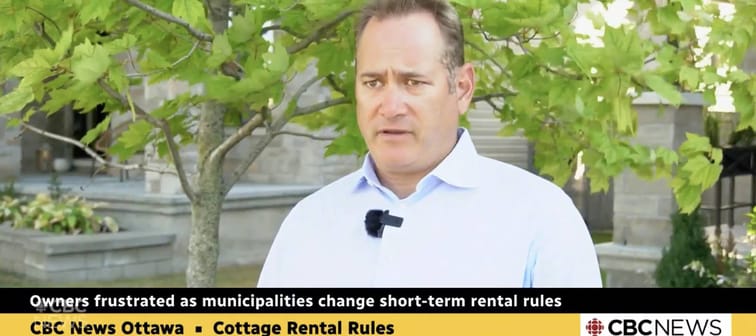
In Calabogie, Ont., Gabriel Leclerc is about to do something few cottage owners ever imagine — sell family-owned properties. After years of renting them on Airbnb, he says new township licensing rules have made hosting a financial and logistical burden.
Leclerc’s story, reported by CBC News, began when Greater Madawaska introduced a $300-a-year licensing requirement for short-term rentals. To qualify, homeowners must submit documents like septic-system maps and property layouts, formats many say are burdensome and duplicative. .
From family tradition to financial headache
For Leclerc, renting out the cottages was more than extra income. It was also a way to offset maintenance costs and keep the properties in the family. Now he says “that extra work and burden of licensing just doesn’t make it worth it anymore”.
He’s not alone. Another owner in the area, Kelly Percival-Green, used to rent a ski cabin for a few summer weeks to “see the bills partially paid.” Now, living two hours away, she’d have to hire someone to handle emergencies and safety checks. “It just became so that it was not worth renting anymore,” she told CBC. “Now we’re just paying the bills and we’re cringing a little bit because it hurts financially.”

Sponsored
Smart investing starts here
Build your own investment portfolio with CIBC Investor’s Edge online and mobile trading platform. Enjoy low commissions on trades and special pricing for active traders, students and young investors.
Get started todayWhy municipalities are tightening rules
Many cottage towns across Ontario now require short-term rental licences, even in rural municipalities. In Greater Madawaska, the goal is to ensure safety and community standards. Licensing helps enforce fire codes, occupancy limits and noise bylaws.
The move echoes a growing trend in Ontario and beyond, where municipalities — from Kawartha Lakes to Haliburton — are imposing licensing, inspections and fees that range from a few hundred to over $1,500 annually, depending on location and whether the rental is “hosted” or not.
Striking the balance: community safety or financial squeeze?
For hosts, the regulations are increasingly framed less as protection and more as punishment. Many owners who treat short-term renting as a casual side-income, not a business, feel pushed out by the red tape.
To renters, the impact is mixed. On one hand, licensed listings may offer greater safety and reliability. On the other, fewer rental options could translate into higher nightly rates, especially in tourist-heavy areas like Calabogie.

Sponsored
Take control of your money with Monarch
Simplify your finances with Monarch, the all-in-one app designed to help you budget, track spending, and hit your goals faster. For a limited time, get 50% off your first year with code WISE50.
Start your free trial todayWhat homeowners should do now
Cottage owners facing similar rules can take practical steps to adapt:
- Know your local rules: Licensing fees, required documents and inspections vary widely — research what applies to you before listing again
- Weigh the costs: Calculate whether rental income still offsets licensing, paperwork and managing safety compliance
- Consider alternatives: If short-term hosting has become unprofitable, a mid-term or long-term rental setup may be more sustainable
- Stay informed: Bylaws are still evolving, keep an eye on provincial developments or municipal adjustments
What renters need to consider
Guests should also be aware of evolving rules:
- Check for visible license numbers: In regulated towns this is increasingly mandatory for an Airbnb to be considered legal
- Expect fewer choices and possibly higher prices: Supply may shrink as hosts drop off, especially beyond peak seasons
- Verify cancellation terms: With listings being pulled suddenly, flexible booking policies may offer better protection
- Prioritize safety: Licensing may add costs but also ensures basic standards, like smoke alarms and emergency contact protocols, are in place
A market reshaped by regulation
Gabriel Leclerc’s decision to exit STR hosting and sell two cottages is a sign of shifting economic realities in cottage country, where regulation, rising costs and changing local priorities are rewriting the rulebook.
For cottage owners and travellers alike, the message is clear: cottage rentals can still work, but the path forward is a lot steeper. Understanding the rules, factoring in the real costs of compliance and planning for uncertainty will be key to navigating this new landscape.
Sources
1. CBC News: Cottage owners pull rentals as new licensing rules affect Ontario, by Isabel Harder (Aug 19, 2025)
2. Over Here Toronto: New Rules Killing Ontario Cottage Rentals? What Owners Must Know, by Julie Anne L. (Aug 19, 2025)
How Dave Ramsey’s plan helps people ditch debt for good
Tired of living paycheck to paycheck? Dave Ramsey’s popular 7-step method shows you exactly how to wipe out debt and finally build real savings. No gimmicks — just a clear plan that works.

Leslie Kennedy
Senior Content Editor
Leslie Kennedy served as an editor at Thomson Reuters and for Star Media Group, followed by a number of years as a writer and editor and content manager in marketing communications, before returning to her editorial roots. She is a graduate of Humber College’s post-graduate journalism program and has been a professional writer and editor ever since.
Explore the latest articles

Warren Buffett’s real estate strategy explained
The big-name billionaire's mindset has shaped his entire investing philosophy

Vawn Himmelsbach
Freelance Contributor


Disclaimer
The content provided on Money.ca is information to help users become financially literate. It is neither tax nor legal advice, is not intended to be relied upon as a forecast, research or investment advice, and is not a recommendation, offer or solicitation to buy or sell any securities or to adopt any investment strategy. Tax, investment and all other decisions should be made, as appropriate, only with guidance from a qualified professional. We make no representation or warranty of any kind, either express or implied, with respect to the data provided, the timeliness thereof, the results to be obtained by the use thereof or any other matter. Advertisers are not responsible for the content of this site, including any editorials or reviews that may appear on this site. For complete and current information on any advertiser product, please visit their website.
†Terms and Conditions apply.
