

Monique Danao
Updated Jul 11, 2025
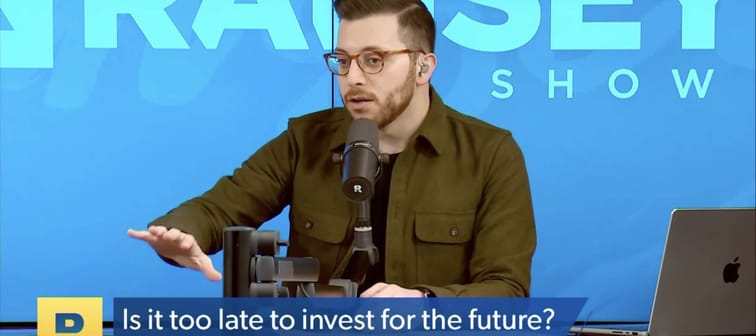
She’s debt-free, has some savings and no major expenses. But at 60, Andrea still isn’t sure she can buy a home or retire — and she called into The Ramsey Show to ask if it’s even possible.
“I want to own a home and retire one day,” the Phoenix, Arizona resident told co-hosts George Kamel and Dr. John Delony.
But with a modest monthly income of US$2,864 and no retirement strategy in place, she’s unsure how — or if — she can make that dream a reality. Here’s the skinny on her retirement plan and how it can help you.
Breaking down her income
Andrea lives with her son and his family and only pays for car insurance, gas and the occasional incidental. That leaves her with approximately US$2,154 each month to save.
She has US$69,000 in a 401(k) — which is the American equivalent of an RRSP — and US$45,000 in a savings account. She’s also considering relocating to Ohio, where her aging siblings live, to be closer to family and cut living costs.
Andrea works in medical records and hopes to move to a remote role at her company that pays about US$40,000 annually. She’s also certified in medical coding but hasn’t worked in that role.
The hosts quickly identified her biggest hurdle: boosting her income.
“What you’re facing here, Andrea, is an income problem,” Kamel said. “We’ve gotta get your income up because that’s going to create more margin for you to save for that home.”

Sponsored
Smart investing starts here
Build your own investment portfolio with CIBC Investor’s Edge online and mobile trading platform. Enjoy low commissions on trades and special pricing for active traders, students and young investors.
Get started todaySaving for retirement at 60
Starting late doesn't mean it's too late. At 60, Andrea still has solid options to grow her retirement savings.
1. Put money away for a down payment
The hosts recommended using her US$45,000 as both an emergency fund and a down payment reserve. They advised setting aside three to six months’ worth of living expenses as a safety net, with the rest going toward a future home purchase.
2. Invest 15% of her income into retirement
Andrea said she’s currently investing only about 1%. The hosts stressed that saving alone isn’t enough. They encouraged her to invest in mutual funds through her retirement account. If done consistently, she could see 10-12% average returns over time.
3. Pursue higher-paying roles
With her experience and certification in medical coding, Andrea could land a better-paying remote job. While her starting salary is US$40,000, the field offers room to grow.
“ Even if it's not the exact role you want, I would just try to get on a ladder,” Kamel said.
4. Continue living with family or find a roommate
To keep saving aggressively, the hosts suggested Andrea stay with her son or consider moving in with her siblings once she’s in Ohio.
“It might not be ideal,” Delony said, “ but I love the idea of you saving money over the next five or 10 or 15 years until somebody can help you."
5. Adjust expectations around retirement
Andrea may need to work into her 70s to reach her goals. That’s not uncommon — in 2022, one in five Canadian seniors aged 65 to 74 were working, almost half by necessity, according to Statistics Canada.
“ You know you got US$69,000 in that retirement account,” Kamel said. “(If) you keep investing, let's say, a thousand bucks a month. If you can do that to 72, you'll have over half a million in that nest egg. ”
He added that she could also get a reasonable mortgage to avoid paying rent forever.
Andrea’s situation underscores a growing concern for older North Americans: how to make a smooth and comfortable transition to retirement. The co-hosts stressed that with focus and a solid long-term plan, Andrea still has a real shot at a meaningful future.
Sources
1. The Ramsey Show Highlights: Is It Too Late For Me To Invest For My Future? (May 15, 2025)
2. Statistics Canada: Employment by choice and necessity among Canadian-born and immigrant seniors (April 24, 2024)
How Dave Ramsey’s plan helps people ditch debt for good
Tired of living paycheck to paycheck? Dave Ramsey’s popular 7-step method shows you exactly how to wipe out debt and finally build real savings. No gimmicks — just a clear plan that works.

Monique Danao
Freelance journalist, editor and copywriter
Monique Danao is a highly-experienced journalist, editor and copywriter with an extensive background in finance and technology. Her work has been published in Forbes, Decential, 99Designs, Fast Capital 360, Social Media Today and the South China Morning Post. She leverages her industry expertise to produce well-researched and insightful articles. She has an MA in Design Research from York University and a BA in Communication Research from the University of the Philippines - Diliman.
Explore the latest articles

Can you pay the CRA with a credit card?
Can you pay your taxes using a credit card? Yes, but that doesn’t mean you should. Here’s what to consider before swiping for the taxman

Leanne Armstrong
Contributor


Disclaimer
The content provided on Money.ca is information to help users become financially literate. It is neither tax nor legal advice, is not intended to be relied upon as a forecast, research or investment advice, and is not a recommendation, offer or solicitation to buy or sell any securities or to adopt any investment strategy. Tax, investment and all other decisions should be made, as appropriate, only with guidance from a qualified professional. We make no representation or warranty of any kind, either express or implied, with respect to the data provided, the timeliness thereof, the results to be obtained by the use thereof or any other matter. Advertisers are not responsible for the content of this site, including any editorials or reviews that may appear on this site. For complete and current information on any advertiser product, please visit their website.
†Terms and Conditions apply.
