

Sabina Wex
Updated Dec 30, 2025
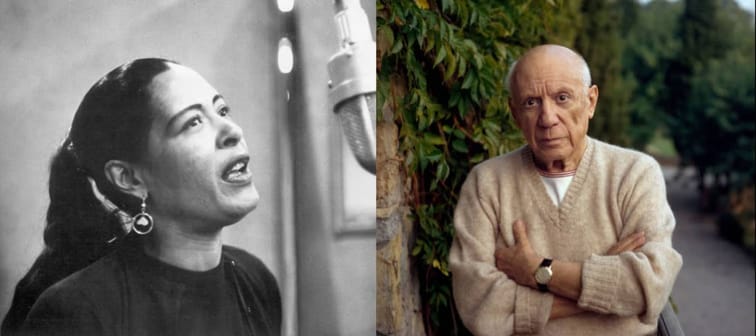
Although Billie Holiday and Pablo Picasso were household names who were celebrated for their respective artistic contributions, they weren’t exactly the best role models when it came to estate planning.
However, they’re only two names in a long list of celebrities who didn’t leave behind detailed wills — but left lengthy legal battles in their wake instead.
For the average Canadian, legal and administrative costs for the death of a loved one — lawyers fees, probate and court costs — can range from just over $4,000 to more than $11,000, depending on the size of the estate (1). An Edward Jones summary stated that in Ontario, estates starting at $500,000 incurred a fee of 1.5% of the estate’s value (2).
Physical assets aren’t the only estate considerations, either. If you have intellectual property (IP), trade secrets or anything intangible that you want to protect after your death, you can learn a few lessons from these celebrities’ mistakes.
How control of Billie Holiday’s legacy slipped away
Although 44-year-old Billie Holiday died with little money, her recording royalties, images and publishing rights were considered valuable assets.
However, because she didn’t have a will, her abusive third husband, Louis McKay, received her entire estate in 1959, according to Billboard (3).
“It’s not right that someone who was as awful to Billie Holiday as Louis McKay was would then have control of her likeness and her money,” Danyel Smith, the author of the book Shine Bright: A Personal History of Black Women in Pop told the music outlet.
After McKay’s death in 1981, Holiday’s estate was passed on to his heirs, including his widow, Bernice McKay. She then sold the estate to a publishing company in 2012.
“It’s insane, at the end of the day, control of her money and likeness is in the hands of people who didn’t know her or have a relationship with her,” Smith told Billboard.

Sponsored
Smart investing starts here
Build your own investment portfolio with CIBC Investor’s Edge online and mobile trading platform. Enjoy low commissions on trades and special pricing for active traders, students and young investors.
Get started todayIntellectual property lives on after death
In Canada, intellectual property (IP) — including copyright, patents, trademarks or trade secrets continue to hold value after the owner’s death. Without having a valid will, your estate will be transferred according to provincial or territorial intestate laws, potentially leading to outcomes you didn’t want, similar to a case like Holiday's.
The first thing you need to do is make a will. Once you list beneficiaries — or just one beneficiary — your IP will automatically be passed on to them, end-of-life care specialists at Eirene note (4).
A beneficiary can be a child, spouse, partner or friend. Make sure the will executor is someone you trust because they will be looking after your legacy and finances after you die.
If you have specific wishes for your IP after death, list them in detail. For instance, the Beastie Boys famously won’t license their music for commercial use. Band member Adam “MCA” Yauch, who died in 2012, even wrote this request into his will, according to Vulture (5).
Also, create a trust for your IP. You can control this in both life and death — with the latter requiring specific instructions, of course. This is particularly helpful if you only want specific people to make decisions and financially benefit from your IP.
If you’re reluctant about making a will
Picasso didn’t leave a will either. The artist’s estate was estimated at US$250 million (C$342 million) in 1980, but was probably worth a lot more, according to Vanity Fair (6).
After six long tumultuous years and US$30 million (C$41 million) dollars in settlement costs later, his estate was divided among his seven heirs.
His lawyer, Armand Antebi, explained why he didn’t make a will: “He never made one because of superstition,” he told the New York Times after Picasso’s 1973 death (7). “A way of avoiding death, one might say.”
It’s reasonable to fear death and avoid talking about it or preparing for it. But as personal finance celebrity Dave Ramsey once said on The Ramsey Show: “If you hate the people in your family, leave unclear instructions and no will. Because they will all fight [for] the rest of their lives over your crap.”
Do yourself and your family a favour and write up a will. If you choose, you can speak with your beneficiaries in advance about how you’d like your will to be executed, so that they can keep your IP and legacy alive in a way that will honour your wishes.
As a general rule of thumb, regularly review and update your will. Many attorneys will advise revisiting your documents every five years or so to make adjustments.
After all, you want to ensure all the initial planning you took — time, money and effort — simplifies everything for your heirs when the time comes to put it to use.
Article sources
We rely only on vetted sources and credible third-party reporting. For details, see our editorial ethics and guidelines.
Clear Estate (1); Edward Jones (2); Billboard (3); Eirene (4); Vulture (5); Vanity Fair (6); The New York Times (7)
How Dave Ramsey’s plan helps people ditch debt for good
Tired of living paycheck to paycheck? Dave Ramsey’s popular 7-step method shows you exactly how to wipe out debt and finally build real savings. No gimmicks — just a clear plan that works.

Sabina Wex
Reporter
Sabina Wex is a writer and podcast producer in Toronto. Her work has appeared in Business Insider, Fast Company, CBC and more.
Explore the latest articles

Can you pay the CRA with a credit card?
Can you pay your taxes using a credit card? Yes, but that doesn’t mean you should. Here’s what to consider before swiping for the taxman

Leanne Armstrong
Contributor


Disclaimer
The content provided on Money.ca is information to help users become financially literate. It is neither tax nor legal advice, is not intended to be relied upon as a forecast, research or investment advice, and is not a recommendation, offer or solicitation to buy or sell any securities or to adopt any investment strategy. Tax, investment and all other decisions should be made, as appropriate, only with guidance from a qualified professional. We make no representation or warranty of any kind, either express or implied, with respect to the data provided, the timeliness thereof, the results to be obtained by the use thereof or any other matter. Advertisers are not responsible for the content of this site, including any editorials or reviews that may appear on this site. For complete and current information on any advertiser product, please visit their website.
†Terms and Conditions apply.
