

Leslie Kennedy
Updated Nov 19, 2025
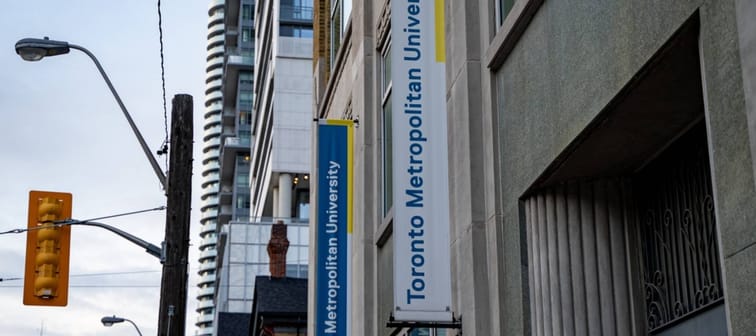
For families sending a child away to university, housing costs can now rival tuition — sometimes even surpass it. Toronto Metropolitan University (TMU) is stepping into this pressure cooker with plans for a 21-storey residence on Bond Street, set to open in 2030 (1).
The building will add more than 1,370 beds, more than doubling TMU’s current housing capacity of just over 1,100 beds for roughly 48,000 students. Backed by Cedar Podium and $83 million in provincial financing, the project isn’t just about new beds, it’s about giving students and families a measure of stability in an unpredictable housing market.
“This new residence not only increases on-campus housing options at TMU, it also offers another enhanced element of campus life for current and prospective students,” TMU president Mohamed Lachemi, said in a release (2).
Beneath the announcement lies a bigger story: In Canada’s largest cities, where a student lives can determine not only their comfort and community, but whether attending that particular university is financially feasible in the first place.
Why housing matters more than ever
Take Toronto, home to TMU, the University of Toronto and York University. The average rent price for a one-bedroom unit sits at $1,715 per month, while a two-bedroom averages $2,690 (3). Vancouver, home to UBC, has a two-bedroom average price that hovers around $3,170 (4). Even when students share units, additional costs like utilities, transit and food can quickly rival what they pay for tuition.
For TMU students, limited on-campus housing means competing with working renters in a tight market. The Bond Street residence is designed to help: Mostly self-contained three-bedroom suites with kitchens and flexible nine- or 12-month leases. Students who choose to cook instead of relying on meal plans could save $200–$400 per month, depending on how often they eat on campus.

Sponsored
Smart investing starts here
Build your own investment portfolio with CIBC Investor’s Edge online and mobile trading platform. Enjoy low commissions on trades and special pricing for active traders, students and young investors.
Get started todayResidence or rental? The cost trade-offs
Even on-campus housing isn’t cheap in Canada’s largest markets. At the University of Toronto, downtown residence fees run from $21,933 to $26,202 per year, including a mandatory meal plan (5), which equates to roughly $2,700–$3,200 per month. Vancouver’s UBC isn’t far behind: Place Vanier's shared rooms cost $13,696, while single units in Orchard Commons reach $16,754 (6).
For families, the choice often isn’t about saving a few hundred dollars; it’s about predictability and safety. A guaranteed bed, stable lease and campus resources can outweigh even the most carefully calculated off-campus budget.
A national perspective
Not every Canadian city carries this kind of price tag. In Montreal, McGill University residences cost $10,750 annually, plus a $5,800 meal plan (7). At the University of Prince Edward Island, residence averages $12,350 per year (8). Mid-sized cities like Kingston, home of Queen's University, offer a range from $11,559 for a loft double to $17,044 for a single, including a meal plan (9) — and local rents in Kingston are far below that of Toronto or Vancouver.
Manitoba and Saskatchewan provide similar contrasts. At the University of Manitoba, a single room with a meal plan costs $12,739–$16,729 annually (10). Residence fees at the University of Saskatchewan remain relatively modest depending on room type and term.
These examples highlight a key point: Geography matters as much as tuition. The same degree can carry vastly different living costs depending on where a student studies.

Sponsored
Take control of your money with Monarch
Simplify your finances with Monarch, the all-in-one app designed to help you budget, track spending, and hit your goals faster. For a limited time, get 50% off your first year with code WISE50.
Start your free trial todayTMU shows how universities are tackling the housing crunch
TMU’s Bond Street Residence illustrates how universities are responding to structural housing shortages. “Doubling the space for accommodations ensures that students have more options to positively influence their academic performance and be part of a thriving campus community,” Lachemi said.
But the residence won’t open until 2030. Several incoming student cohorts will continue to compete for expensive private rentals, meaning families must plan for today’s realities, not future capacity.
What families can do to prepare to send their kids away to school
Start budgeting early
Because housing is often more expensive than tuition, families should build multi-scenario budgets that compare residence costs, shared rentals and different lease lengths.
Use public data
CMHC rent statistics and university housing pages offer transparent numbers. These should anchor any housing plan.
Compare geographic options
The difference between an expensive CMA and a mid-sized one like Kingston or Charlottetown can reshape a family’s total financial commitment.
Apply for residence early
At TMU, UBC, U of T and other schools with housing shortages, applications fill quickly. Early application can be the difference between a stable cost and unpredictable rental market exposure.
Account for food, utilities and transit
Self-contained suites like TMU’s new model could lower food costs for some students. Families should price out meal plans versus cooking independently.
Plan for variability
Rents can change rapidly. Building a cash buffer can prevent financial distress if housing costs rise or if a student must change housing mid-year.
Start saving, yesterday
It's never too late to start an RESP to help pay for post-secondary education. For short-term savings or an emergency fund, a GIC or HISA can earn interest safely while staying accessible.
Bottom line: housing is now one of the biggest determinants of affordability
TMU’s Bond Street Residence is a promising new development, creating more capacity, flexibility and stability. But it also highlights a broader truth about post-secondary education in Canada: Housing, not tuition, is increasingly the defining cost of sending a child away to school.
For families making decisions now, using transparent data, comparing regions, reviewing residence options and preparing for variable rent conditions can make a challenging financial landscape far more manageable.
Article sources
We rely only on vetted sources and credible third-party reporting. For details, see our editorial ethics and guidelines.
Toronto Metropolitan University (1), (2); Statistics Canada (3 ), (4 ), University of Toronto (5); UBC (6); McGill University (7); University of Prince Edward Island (8); Queen's University (9); University of Manitoba (10)
How Dave Ramsey’s plan helps people ditch debt for good
Tired of living paycheck to paycheck? Dave Ramsey’s popular 7-step method shows you exactly how to wipe out debt and finally build real savings. No gimmicks — just a clear plan that works.

Leslie Kennedy
Senior Content Editor
Leslie Kennedy served as an editor at Thomson Reuters and for Star Media Group, followed by a number of years as a writer and editor and content manager in marketing communications, before returning to her editorial roots. She is a graduate of Humber College’s post-graduate journalism program and has been a professional writer and editor ever since.
Explore the latest articles

Rate cuts aren't bringing relief
For most Canadians, the math still doesn't work
Leslie Kennedy
Senior Content Editor


Disclaimer
The content provided on Money.ca is information to help users become financially literate. It is neither tax nor legal advice, is not intended to be relied upon as a forecast, research or investment advice, and is not a recommendation, offer or solicitation to buy or sell any securities or to adopt any investment strategy. Tax, investment and all other decisions should be made, as appropriate, only with guidance from a qualified professional. We make no representation or warranty of any kind, either express or implied, with respect to the data provided, the timeliness thereof, the results to be obtained by the use thereof or any other matter. Advertisers are not responsible for the content of this site, including any editorials or reviews that may appear on this site. For complete and current information on any advertiser product, please visit their website.
†Terms and Conditions apply.
